SBL 2017 Paper: Sounding Biblical: The Use of Stock Phrases in Christian Apocrypha

Update (2017-09-11): Due to a family situation, I will not be attending SBL in Boston this November. This paper will likely be presented at a future SBL.


As I mentioned a few weeks ago, my proposal for the open Christian Apocrypha session was accepted. I described it to a friend like this: “Hey, I snuck a corpus linguistics paper into the Christian Apocrypha section!”

Here’s the abstract for those interested:

There are certain phrases that, due to familiarity and usage, seem biblical upon hearing or reading them. That is, they sound like language used in the Bible. Phrases like “in the beginning,” “all the creeping things that creep,” and “truly, I say to you.” This paper uses a variation on what are known as n-grams to isolate stock phrases and explore their use and effect in apocryphal works. The First Apocryphal Apocalypse of John (1AAJn), which the author is presently researching for volume 2 of the “More New Testament Apocrypha” project, is used as a test case. The entirety of the Septuagint and Greek New Testament are used to identify five-word clusters of shared vocabulary that repeat with some frequency in biblical literature (“stock phrases”). 1AAJn is then compared to the biblical literature to locate possible stock phrase usage within 1AAJn. If time and space permit, Greek editions of other writings (Apocryphal Gospels, Apostolic Fathers, possibly some non-Christian writings) will also be evaluated at a high level to determine use or non-use of stock phrases in composition.


NA29? NA30? Notes from an Old (2007?) SBL Session

The other day, I ran across the following stuffed deep in my office bag. It had to have been from a pre-2009 SBL (2007 because I didn’t go in 2008?). That means it migrated across 3 different bags at minimum. Astounding.

Check out this incredibly optimistic (in hindsight) timeline for the NA/UBS editions. I distinctly remember taking these notes.

ubs-timeline-old-001-png

Notable to me are the association of a corrected UBS4 aligned with NA28 to be released in 2009, and that UBS5 and NA29 were supposed to be aligned and published in 2014. In reality, UBS5 is functionally equivalent with NA28. NA28 was published in 2012, corrected printing in 2013, and UBS5 in 2014(?). So we may be due for an NA29/UBS6. And I can’t wait for NA32, it should be awesome.

Please note: I’m not criticizing the ambitious nature of this timeline. I love it — goals and targets are good things. I just thought it interesting that there was a publication plan and milestones for that plan have existed for awhile. The publication dates are synced with releases to the ECM, so I’d guess the next NA edition will include material for Acts and perhaps John and maybe even Revelation (which would be very cool).

Whatever the case, I’m sure that the current plan is much different than the above. Difficult, complex projects take a long time, even with well-planned milestones. Bring on NA29, whatever changes it may contain!

When Life Sucks

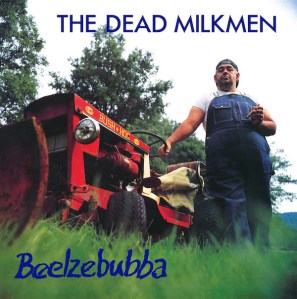
beelzebubba-001It’s no coincidence that earlier today I queued up YouTube to play The Dead Milkmen’s “Life is Sh*t” off their “Beelzebubba” album.

At that point, life honestly was sh*t.

We’ve been trying to adopt, it seems, forever. I have few memories these days of those glorious days when we weren’t trying to jump over the next adoption hurdle. It has, honestly, been a part of our lives for over seven years. Our son, who is nearly 5, is adopted. And we’ve been pursuing an adoption for well over two years for our third child.

But there have been many more hurdles this time. Our agency went defunct last year, so we had to start over. We had some money issues, but resolved enough of them to proceed. Then came the glorious match in November, and the heartbreaking loss of match at the end of December. It was not a happy new year.

Then on Friday of last week, we were matched again, with an overdue birth mom, and the praises rang throughout the land. The weekend was a whirlwind of packing and travel planning. And waiting.

And then this morning, Tuesday, we heard the word we didn’t think was possible: Birth mom decided to parent.

There are a few ways to take this.

  • Optimist: “Third time’s a charm, hopefully!”
  • Pessimist: “I think I’ll listen to the Dead Milkmen’s ‘Life is Sh*t'”

I opted for the pessimistic route. Well, that was after crying, shouting at God in my car all the way home from work, embracing my wife tighter than I have in a long time, and crying my eyes out on her shoulder (and she on mine). And crying again when talking to our kids.

Why am I telling you this? Well, first of all, writing is therapeutic, as is honest confession. Second of all, life can be sh*t. God doesn’t say he’s going to save us from all the crap in this life and things will be rosy, and all will be well (cf. Job, Naomi, David, Abraham & Sarah, Peter, Paul, Mary, etc., etc.). We’re not isolated from the effect and circumstance of sin just because we mumbled some magic phrase when we were kids (or adults). No matter what Joel Osteen, Creflo Dollar, or Joyce Meyer tell you.

No, there is crap in our lives. But it is part of our lives (cf. Gen 1–3). And it shows us how good God really is. Through his son Jesus, he willingly came down into this sh*t-fest we call life and lived it with us. He said he would let his perfect life (somehow, in the midst of all us feces-flingers, he stayed above the fray) cover ours too, so that God would see us as God sees him: perfect, righteous, and unstained.

Even though we’ve all been wallowing in the slough of despond for awhile. Even though, try as we may, we can’t scrub it off.

This is the life we live. There is crap, and we can’t get rid of it. We shouldn’t be surprised by it, or when crap spews all over us at the most inopportune times in our lives (like when we’re trying to adopt!). But we should praise God that Jesus Christ, our mediator, stands in our place, so God doesn’t see (or smell) the manure we roll around in.

And when it’s time for Jesus to come get us; when we don’t need faith and hope any more because his love for us will be fully realized (cf. 1Co 13), we will be removed from this cesspool of life, and restored to him.

Let him come soon.

Christians, Soldiers, and Word Studies

I’m currently working through the text and vocabulary of Second Timothy, writing Lexical Commentary on the Pastoral Epistles: Second Timothy. I ran into the curious phrase in 2Ti 2:3, “as a good soldier of Christ Jesus.”

This actual phrase “soldier of Christ” only occurs here in the NT. This got me digging a bit because — having grown up in the church — the notion of “Christian soldiers” is not unfamiliar. I was surprised that the only other relatively early witness to this phrasing was found in the Acts of Paul. Of course there is other imagery (e.g. “Christian Armor” in Eph 6:10–20), but I was looking at the expression of a Christian as a soldier.

It was only when I expanded my search from the specific phrase to words sharing common roots that I remembered the term “fellow solider,” which Paul uses twice elsewhere. If you’re looking at word usage in a corpus, sometimes you have to expand your basis because the same notion/concept can be expressed using different formulations.

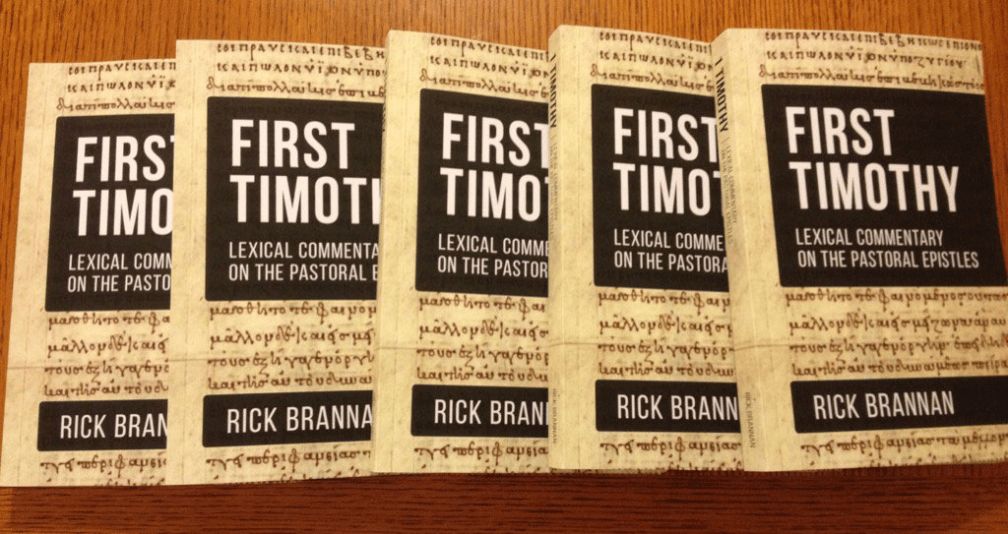
Does this stuff interest you? Get my Lexical Studies in the Pastoral Epistles: First Timothy in print from Amazon or for Logos Bible Software.

Here’s what I ended up with, at least for now. This will change some between now and whenever I get the manuscript done, but I’m over 25% of the way through the text, which is good news for me.


The phrase “good soldier” is a translation of two different Greek words. The first word, “good,” is a translation of καλός.[1] The second word, “soldier,” is a translation of στρατιώτης, ‘soldier,’ in a non-military sense.[2] The Acts of Paul uses the term similarly:

For they saw how Paul laid aside his mood of sadness and taught the word of truth and said: ‘Brethren and soldiers of Christ, listen! (AcPl 10,[3] [4] emphasis added)

The word στρατιώτης is used with frequency in the New Testament. While military language is used elsewhere in descriptions of the Christian life (Eph 6:10–20), the direct association of a soldier (στρατιώτης) with a follower of Jesus is only found in 2 Timothy. The next known usage of this phrase “soldier of Christ” is found in the Acts of Paul which may go back to the second century.[5]

However, the word συστρατιώτης, ‘fellow soldier,’ is used to similar effect in Phm 2 and Php 2:25:

Paul, a prisoner of Christ Jesus, and Timothy our brother, to Philemon, our dear friend and fellow worker, and to Apphia our sister, and to Archippus our fellow soldier, and to the church in your house. (Phm 1–2, emphasis added)

But I considered it necessary to send to you Epaphroditus, my brother and fellow worker and fellow soldier, but your messenger and servant of my need, because he was longing for all of you and was distressed because you had heard that he was sick. (Php 2:25–26, emphasis added)

In these contexts, Paul uses συστρατιώτης to associate Archippus (Phm 2) and Epaphroditus (Php 2:25) with him in common mission for the gospel. They are described as soldiers in common with Paul. They hold common purpose and share a common battle. Understanding Christians as soldiers in common battle is not outside of the frame of Paul or the New Testament.

[1] BDAG pp. 504–505. Occurs 101x in NT, 24x in PE.

[2] BDAG p. 948. Occurs 26x in NT, 1x in PE: 2 Ti 2:3. See also TDNT 7.711–712.

[3] Wilhelm Schneemelcher, “3. The Acts of Paul,” in New Testament Apocrypha, ed. Wilhelm Schneemelcher, trans. R. McL Wilson, vol. 2, 2 vols. ([Cambridge, England]; Louisville, Ky.: J. Clarke & Co. ; Westminster/John Knox Press, 2003), 259.

[4] From the Hamburg papyrus of the Acts of Paul, which BDAG cites as AcPl Ha 8, 9

[5] Hans-Josef Klauck, The Apocryphal Acts of the Apostles: An Introduction (Waco, TX: Baylor University Press, 2008), 48.

On Tools and Efficiency

dog-in-dishwasher-266x300

This is not our dishwasher. (source)

When we moved into our house nine years ago, we knew the dishwasher would have to be replaced at some point. It worked, but it was loud.

Over the years, it continued to function but needed more and more attention. Nothing seriously wrong, just more routine deep cleaning. And small but manageable things started to break, most notably the top rack which would — unless you paid attention and pulled it out just right — slide out of the track and fall onto the bottom rack.

We put up with this for a long time (confession: nobody likes to wash dishes in our house) but in December, it was time to finally replace the old thing. So we did.

A few weeks with the new dishwasher, and I’ve noticed something.

We really didn’t like that old dishwasher.

We had several procedures we’d unwittingly developed to prolong the time between dishwasher runs. In hindsight, I can’t believe I never really noticed them, but now they are plain as day.

First: Paper plates. We’d use paper plates as a substitute to prolong the time between cycles. Real plates pile up between cycles (hey, I’m being honest here) because the dishwasher (you know, the one with the top rack that would fall if not handled correctly?) had clean dishes and we hadn’t had time to unload yet. Using paper plates (for kids’ breakfast and lunch, basically) makes this go away at least one meal.

Second: Too many bowls, glasses, and mugs. I’m convinced we have an overabundance of these sorts of vessels because they piled up between use. I didn’t notice it because, due to the time between cycles, all of them were almost never clean at once. Now, with a tool that actually works, we can be more efficient — and now need to ask the “what do we do with all these extras?” question.

Third: “Is it clean?” The time between dish cycles and the propensity to not want to unload the dishwasher due to possibility of the top rack crashing down means that the dishwasher effectively became specialized cabinet space. And with all those extra vessels (see item two above) there was no desperate need to unload or reload.

Fourth: Noise. The old dishwasher was loud, which meant we typically would run it when we weren’t home. No problem; except we had to remember to start it before we’d leave to go somewhere. Now, since the new dishwasher is so quiet, we can start it any time.

Now, I’m not saying I now magically love to do dishes, or to stack the dishwasher, or to unload it. These aren’t a few of my favorite things (allusion intended).

What am I saying? We had a tool (old dishwasher) and we used it to complete a task  (wash dishes). It got the job done, but it certainly wasn’t efficient. And we had all these other stopgap solutions built up (unknowingly, for the most part!) to help us put up with the non-efficient tool.

This makes me wonder what else in my life suffers from being in a similar situation. What other primary tool do I have that isn’t functioning properly? What tool do I dislike so much that I’ve built up other rituals around it to prolong the period between use?

I’m not one for resolutions. But as 2017 unfolds, my hope is to better see where I’ve built up workarounds (paper plates, more bowls, etc.) because a tool isn’t functioning as efficiently as it should be. And I’m not talking about appliances. I’m talking about my life as a Christian. I’m talking about how I approach relationships with believers and nonbelievers. I’m talking about how I learn and study. I’m talking about how I pray (or don’t). I’m talking about how I interact with my kids.

There’s gotta be other cruft built up. My prayer this year is for open eyes to begin to see it.

Rick’s 2017 Research and Writing Schedule

research-blog-001At the beginning of 2016, I ran a survey to get some feedback about the sorts of projects that folks interested in my material might like.

I think it was a successful thing. I was able to edit and publish my notes on 2 Timothy, my work on the vocabulary of 1 Timothy, and my notes from a course I taught on the Apostles’ Creed. I also wrote an introduction and new translation of the First Apocryphal Apocalypse of John (to be published in the forthcoming volume 2 of Burke & Landau’s New Testament Apocrypha: More Noncanonical Scriptures, (volume 1 here)).

I also started researching and writing for the Lexical Commentary on 2 Timothy, making it through chapter 1.

What do I have planned for the new year? At present, I am not planning on running a survey for feedback. I’m planning to continue work on the Lexical Commentary on 2 Timothy. There is the possibility of a longer term translation/commentary project (on some noncanonical material) that may also happen. I would also like to devote some of my time to reading more widely, but I’m not quite sure how or when that will happen.

If I finish 2 Timothy, it will be published by Appian Way Press, and then I’ll move on to Titus. I may also publish a short study guide on Titus, based on work from a class I taught at a church a long time ago.

That’s about it. Did I miss anything?

My First Timothy book for $15 at #SBLAAR2016

SBL-2016-Inventory-001.png

If you’ve been waiting for a deal on Lexical Commentary on the Pastoral Epistles: First Timothy, and you’ll be in San Antonio for SBL, this is it!

I’ll have some copies available for purchase at the conference. Normally $19.95, you can get it from me for $15 cash ($16.50 if you want to do it via Paypal).

Zap me an email (rick at faithlife dot com) if you’re interested and want to reserve one of these bad boys. I might even sign a copy for you, if you’re in to that sort of thing.

The Conference Season is upon Us

If you have any connection at all with the world of Biblical Studies, particularly the “academic” variety, then you already know that it is that magical time of year when thousands of folks who study the Bible and related texts descend on a particular city, walk around in tweed, run to make paper presentations, mercilessly hawk publishing proposals at any breathing target, fawn over the 15 books Michael Bird published in the last three weeks, and drink copious amounts of coffee (and other beverages, depending on time of day).

Yes, it’s time for the Society of Biblical Literature’s (SBL) annual meeting, this year in San Antonio. These meetings co-occur with the American Academy of Religion (AAR), and religious booksellers the world over vie for coveted corner and entry-door exhibit spaces to sell their wares at discount to folks who reflexively pull out credit cards and buy books.

Previous to the SBL and AAR joint meetings are the meetings of the Evangelical Theological Society (ETS). Several smaller societies (IBR, for one) also meet during these times.

The first time I attended SBL was when it was last in San Antonio (2006? 2005?). I’ve learned a lot about going to these conferences since then. If you’re a rookie, then you need to know the secret: The real power of these conferences is not in hearing some paper (though yeah, you should be diligent and go to papers in your area(s)). The real power of these conferences is in meeting people. Networking. You know, an introvert’s nightmare.

I can say this because I am, most assuredly, an introvert.

But now is the time you need to put your big girl / big boy pants on, and get over it because it is that important to the development of your future career. This is where you meet people who may in later years be on hiring committees for jobs you’re applying for. They may be on the committee reviewing your PhD application. They may be the person you’d like to have supervising your doctoral work, or at least have as an external examiner.

Find any excuse to meet these people. Go to their paper. Ask them to coffee. But do it right. Don’t fawn all over them. Be genuine. And if someone seems unapproachable, find their grad students and take them to coffee. Or sit and chat with them outside the book exhibit. Go to whatever paper they’re giving, listen, and ask them a real question privately afterwards.

Very rarely will you have a place where pretty much everyone who could possibly make a future for you will be in the same city, but Biblical Studies folks do it every year. This is it. So, have fun. Find good papers to hear. Hang out some evenings with your friends and colleagues. But use your time too, because it is an opportunity that few other industries have. Start to build relationships not only because people are interesting, but because you know you’ll run into them in the future.

Me? I’m not teaching anywhere. I’m not a grad student. But I’ve got a great gig wrangling all sorts of data and producing products that people in Biblical Studies find useful (some of them essential).

I’m happy to chat with anyone about almost anything, just use the contact form, or email me: rick@faithlife.com and we can set up a time. I’m happy to chat about self-publishing, writing, editing, textual criticism, Greek, Apostolic Fathers, datasets, databases, programming and tools, my job at Faithlife and opportunities here, or whatever. Seriously.

See you in San Antonio!

The Day After the Day After

My hope is for this to be my last post on the 2016 election, and politics in general, for some time.

I understand concerns that that those who supported Hillary Clinton have (read my previous post). I didn’t vote for Donald J. Trump either. But people, this is America. You have the right to speak, and you have the right to protest. But Donald J. Trump is the president-elect. If you don’t like it, work through your stages of grief already and start to do something about it.

Here’s what you shouldn’t do:

  • Fall into the same echo-chamber problem you accuse Mr. Trump’s supporters of having.
  • Take part in dubious activities that, had the election turned out differently, you’d further scorn others for.
  • Make outrageous and unsubstantiated claims and statements on the social media.
  • Categorically group and castigate people as stupid or imbecilic just because you do not agree with them.
  • Wring your hands over horribleness that has not yet come. It is in the power of all of us to ensure the horribleness doesn’t happen.
  • Remember what Yoda said: “Fear is the path to the dark side. Fear leads to anger. Anger leads to hate. Hate leads to … suffering.”

Here’s what you should do:

  • If you witness civil rights grievances or hate crimes: Document, document, document. Take pictures. Make recordings. Upload to the social medias.
  • Hold the people that do wrong things responsible for the wrong things. It’s not Donald J. Trump’s fault when the KKK marches on a freeway overpass in North Carolina. He didn’t order them to do it. Blame the KKK, they made the decision to do it. Blame the people who support the KKK. Address the issue.
  • Take a break from the social media (unless it’s related to the first bullet point). Refuse to let hate drive you. See Yoda quote above.
  • Talk to your neighbors about kids, about life. Understand people as people — complex beings — and don’t judge.

It’ll be all right. As much as it pains you, give Donald Trump the benefit of the doubt. Extend him and his supporters the courtesy you’d expect had the election turned out differently. He won, now he’s gotta govern.

Let’s see what he does before acting as if the world has ended. After all, it didn’t end when Bill Clinton took office after G.H.W. Bush; it didn’t end when G.W. Bush took office after Bill Clinton, and it didn’t end when Barack Obama took office after G.W. Bush. The world isn’t going to end this time either. Our republic is resilient.

Unity in essentials, liberty in non-essentials, and in all things, charity.